Improve your ROI
- • Work in parallel across multiple stages of production
- • Speed up production processes
- • Achieve more within a day’s work
- • Get the most out of your resources

Fast and formidable, Katana is a look development and lighting powerhouse that tackles creative challenges with ferocity and ease. It arms artists with the creative freedom and scalability to exceed the needs of today’s most demanding CG-rendering projects.
USD-optimised tech, combined with multiple APIs, five different commercial renderers and an open-sourced Shotgun TK integration, make Katana the Swiss Army knife of your pipeline.
See all featuresKatana’s Foresight Rendering workflows, comprised of Multiple Simultaneous Renders and Networked Interactive Rendering, provide artists with scalable feedback for faster iterations.
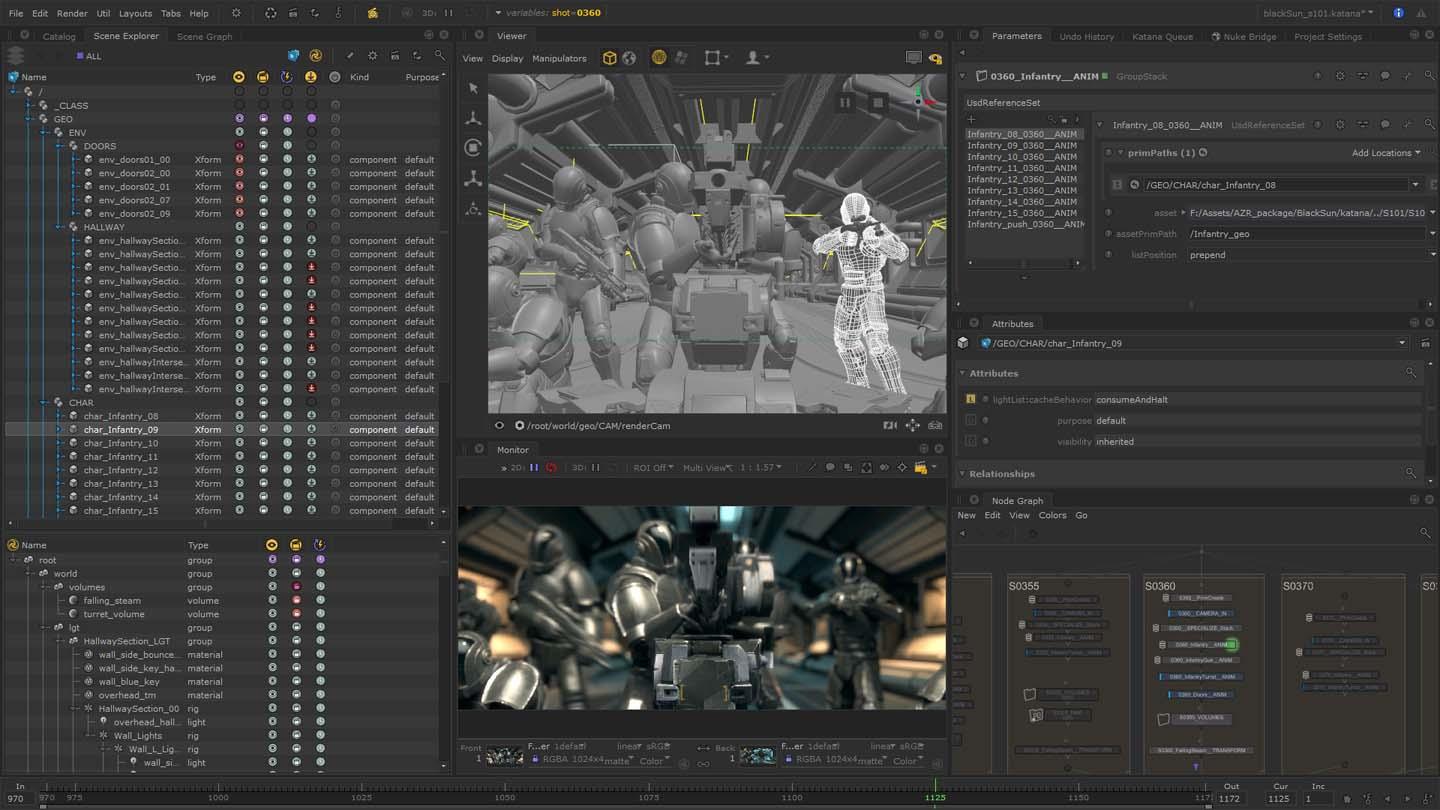
See all featuresLight at the speed of thought thanks to cutting-edge Lighting Tools, empowering artists to light whole sequences of shots with Katana’s industry-leading, multi-shot workflows.
See all featuresKatana is made to drive look development of hero or high volume assets while seamlessly collaborating with shot production.
See all featuresStart your USD journey with Katana 7.0 and experience the best of both worlds. Now you can get hands on with USD native workflows and benefit from Katana’s powerhouse Lookdev and Lighting tools. Katana 7.0 also brings with it a shared framework with Nuke, plus a core series of nodes, enabling effortless native USD scene manipulation, so Katana fits smoothly into your pipeline, saving further development time and headaches.
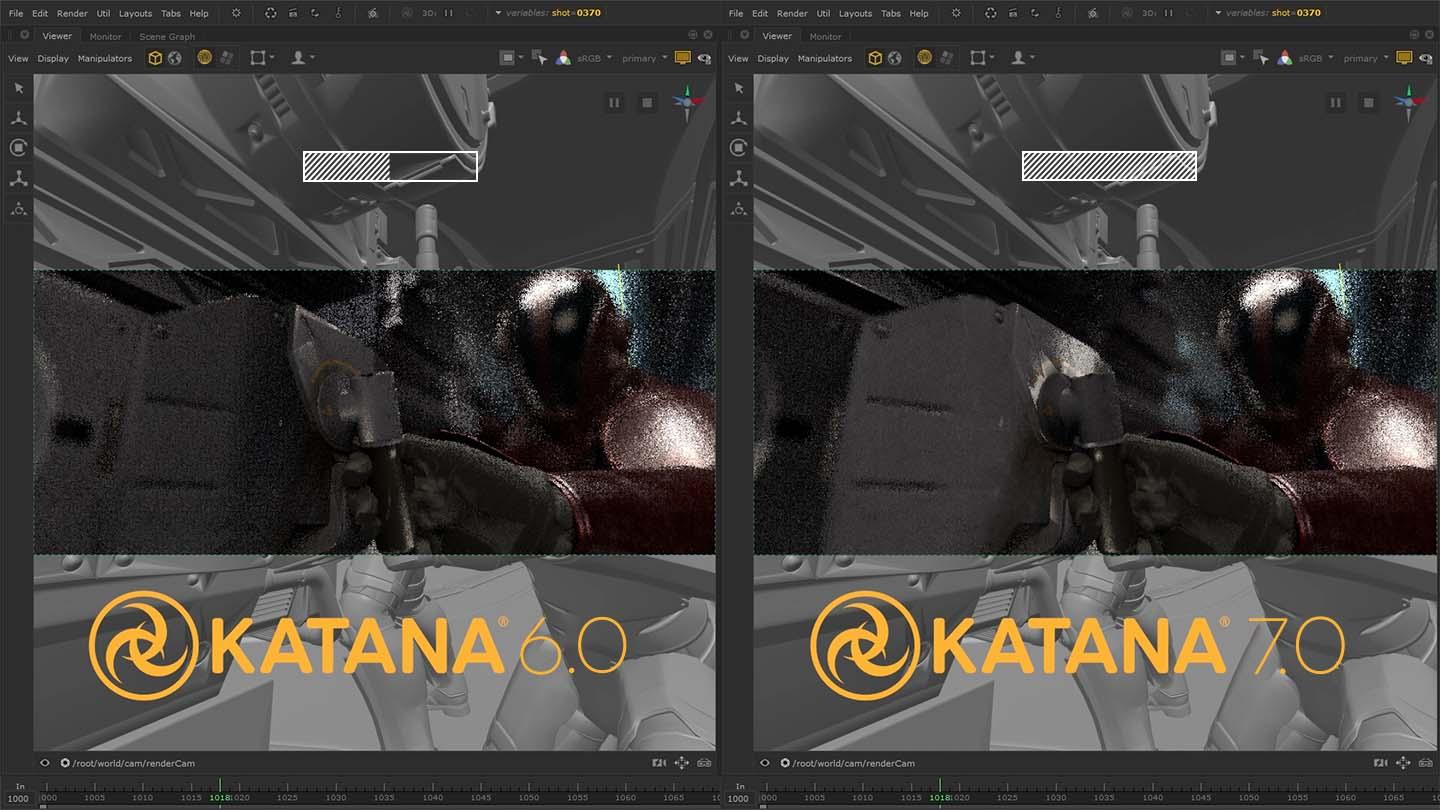
Live Render updates are up to twice as fast thanks to a series of performance improvements, ensuring you spend more time on what really matters. Live Rendering is now multi-threaded, ensuring you can meet ever-increasing industry demands with a robust, reliable and high-performance Katana.
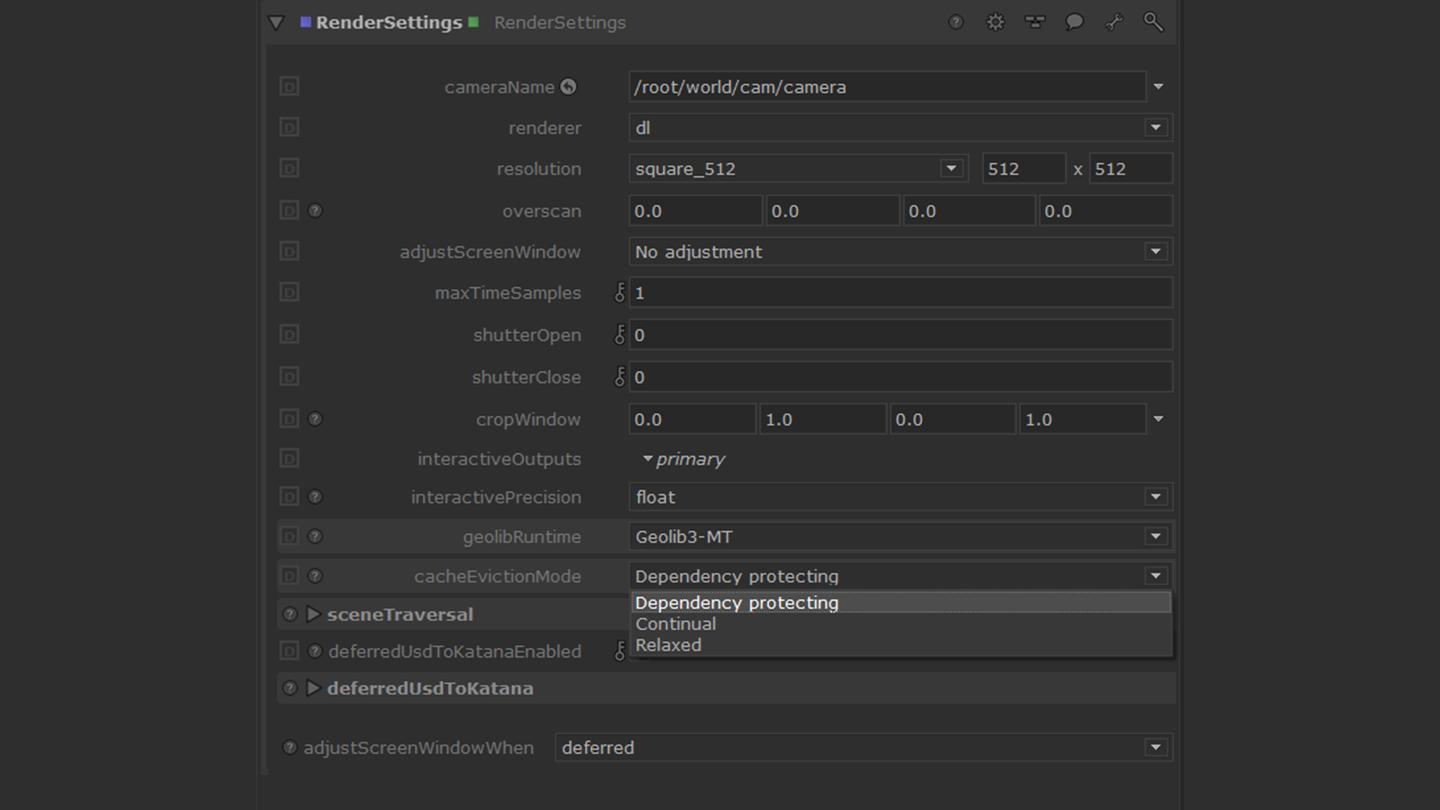
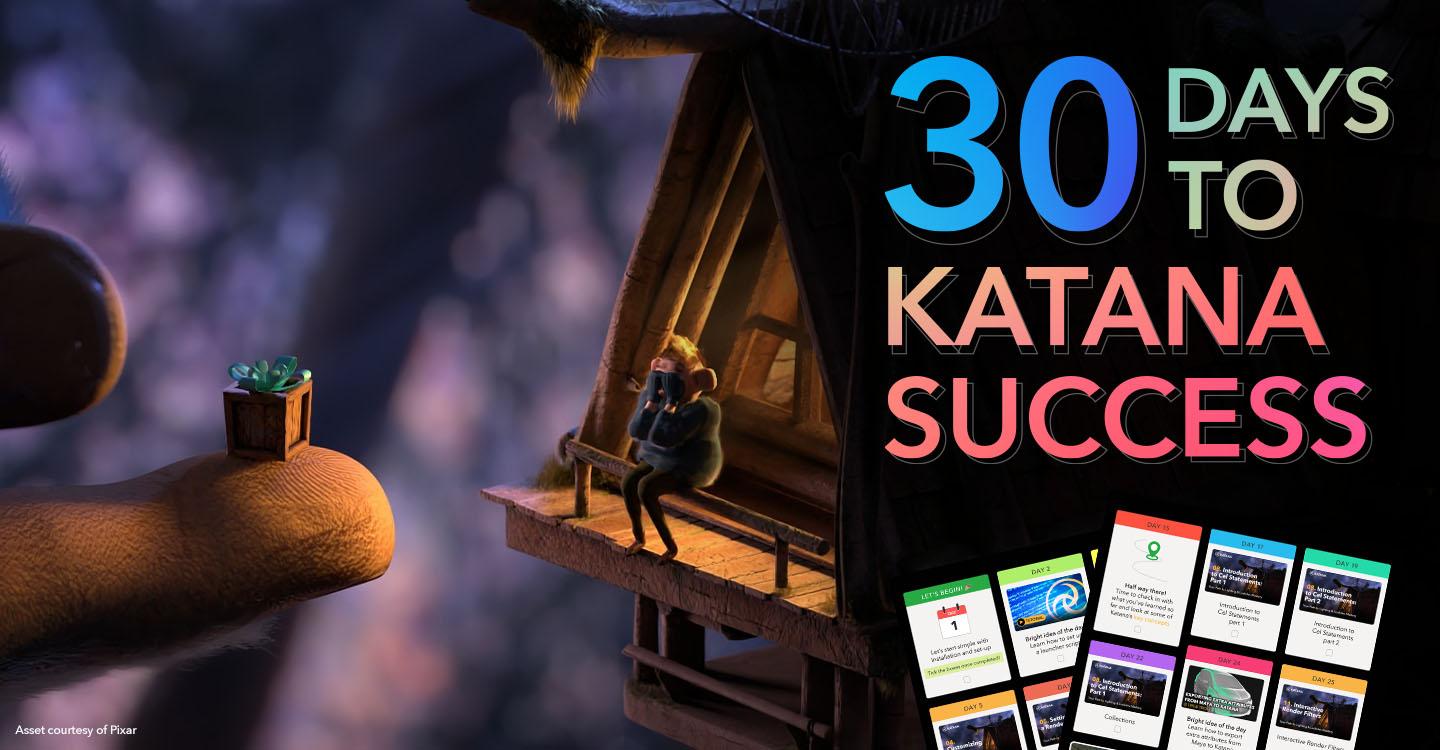
Want to maximize your trialing experience? Follow along our calendar and, by the end of the 30 days, you’ll go from learning key concepts to discovering collaboration through LiveGroups, and everything in between. Get ticking and reach your goals!
USD made easy: Katana ships with a ready-made USD plug-in to make the move to USD as cohesive and seamless as possible.
Vital integrations and collaborations, such as the Katana Shotgun TK open source plug-in, render farm plugins like Deadline and Qube, plus leading asset management software make Katana work seamlessly as part of any pipeline.
Our teams are committed to supporting your studio’s switch to Katana, and making its integration into your pipeline easy and seamless. To find out more about the deployment process, watch Katana Deployment Essentials.
METHOD STUDIOS
"I use Katana because it’s one of the best tools to do my job... It makes work a lot more pleasurable because you spend less time fighting with the software and more time doing your actual job."

SPIN VFX
"From one scene file, they can light 10, 20, 100 shots. We’ve seen a tremendous increase in our productivity."

ANIMAGRAD
"Comparing our previous approach to our current, Katana reduces our man hours by up to 80%!"

LAIKA
"We did some unique things in Katana… which allowed a team of 3 people to bust through 40 some odd characters in a relatively short amount of time."

ILM
"Because we had a bunch of lighting templates set up for bb8 in Katana we were able to put him in there throw some lights in there and make him look amazingly real in just a matter of hours."

SONY
"Some scenes were literally dealing with several million unique shapes. Katana allowed us to handle these monumental scenes with grace.”

LAIKA
"I’ve never used anything that allows us to work on so many shots simultaneously and also handle asset look dev in one location. I really can’t imagine a pipeline without it."

WETA DIGITAL
"Katana has streamlined our lighting pipeline, freeing up our artists to focus more fully on their craft. The performance improvements in the new release should reduce artist iteration time and allow for more sophisticated lighting setups."

RODEO EFFECTS
"Katana will allow you to change your rendering pipeline to a rendering machine, and a rendering machine that goes twice as fast as anything else you might have up your sleeve."

SONY
"Katana looks to be a real benefit to our look dev teams in terms of speed and flexibility. We are excited about the potential for speedups in getting to first pixel for our shot lighting teams.”

WETA DIGITAL
"With Katana, we were able to block the lighting across the shot very quickly in a coherent way, just as a DP on set would have done."

Exclusively available to new customers requiring up to 10 interactive seats
Minimum 3 year term


Available to existing customers, and studios requiring more than 10 interactive seats
Interoperability between Katana and Foundry’s 3D texture painting tool Mari is a huge part of Katana’s past and future development plans to streamline look development workflows everywhere.
Mari is built for today’s most complex creative challenges, shipping with the Arnold Standard Surface, Vray and 3Delight render engines, plus RenderMan for Mari. Using these, artists can paint textures in Mari with a higher degree of confidence that their art will look correct in the final render, reducing feedback loops between Mari and Katana, and offering a smoother look development process.


Discover how UTS Animal Logic Academy is inspiring future artists, and giving them everything they need to succeed in their dream roles in the VFX industry.
Read now
Rodeo FX call Katana the best software for lighting on the market—here’s why.
Watch nowArtists who only have to work in a Katana pipeline can be trained in a day. Most people are very comfortable in their first week. Staff that need to make pipeline choices, teach others, etc. will need more time if they are new to Katana. If you need support with Katana, download our free 30 days to success Katana calendar with the latest tutorials, tips and tricks to support you on your journey.
For tips, tricks and tutorials to help you get up to speed with Katana, please visit the Katana Foundry Learn page.
This depends on how complex your existing pipeline is and what has to be changed. Some clients have been producing commercial work in the first month, whereas others have taken several months. Contact Foundry to have a conversation about how long it might take your team.
Studios of all sizes find success with Katana. Check out our Insights Hub for stories on how Katana works as part of a wider pipeline, different use cases and processes, and the benefits it brings to look development and lighting workflows.
Foundry has an every growing set of learning resources. Independent artists and some schools have published resources. Katana licenses are available for individuals automatically for 30 days with the option to ask for a further 60 days extension if they are learning Katana at home.
This varies based on your particular scenario but we typically see clients using between 10 to 20 render licenses for each interactive license. Most clients do not use less than 5 render licenses per interactive license. With the Katana 4 Foresight workflows, render licenses can power additional interactive capacity for artists.
Find out more about purchasing and licensing with our Licensing FAQs
Get first-hand insight into how exactly Katana can fit into your pipeline.
Discover the creative capabilities of Katana with a free 30-day trial.